textiles
triple weave sonnets
The sonnet is both song and architecture. Often pointed to as the birth of modern poetry, the form mimics the mind in argument with itself.
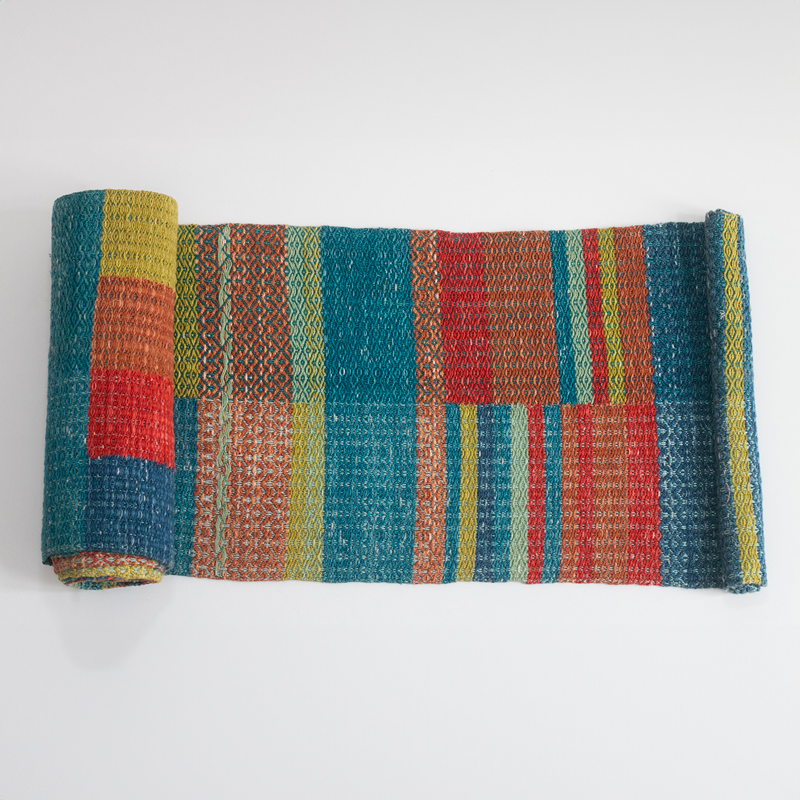
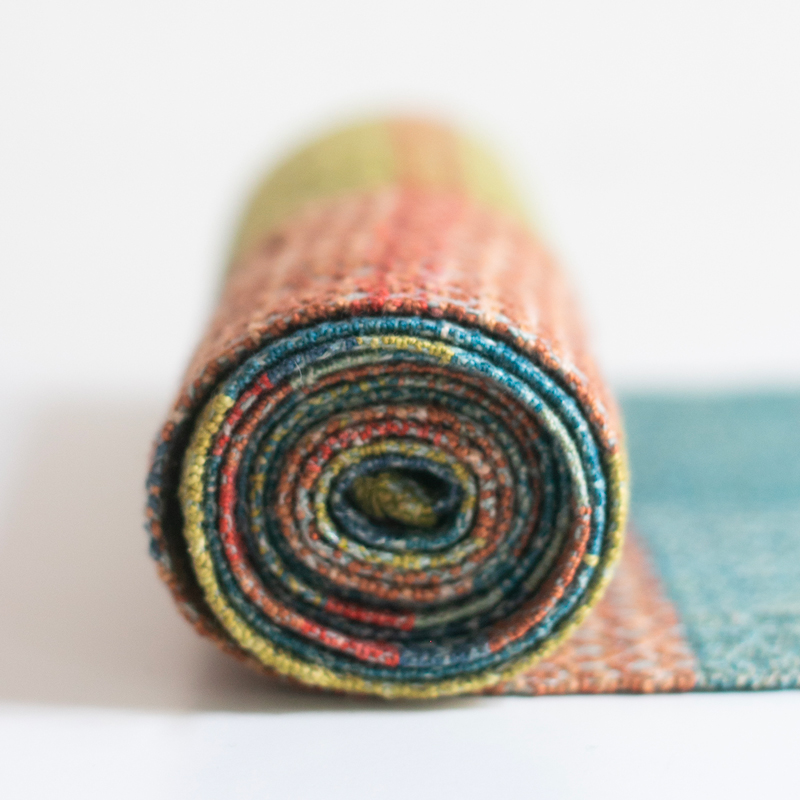
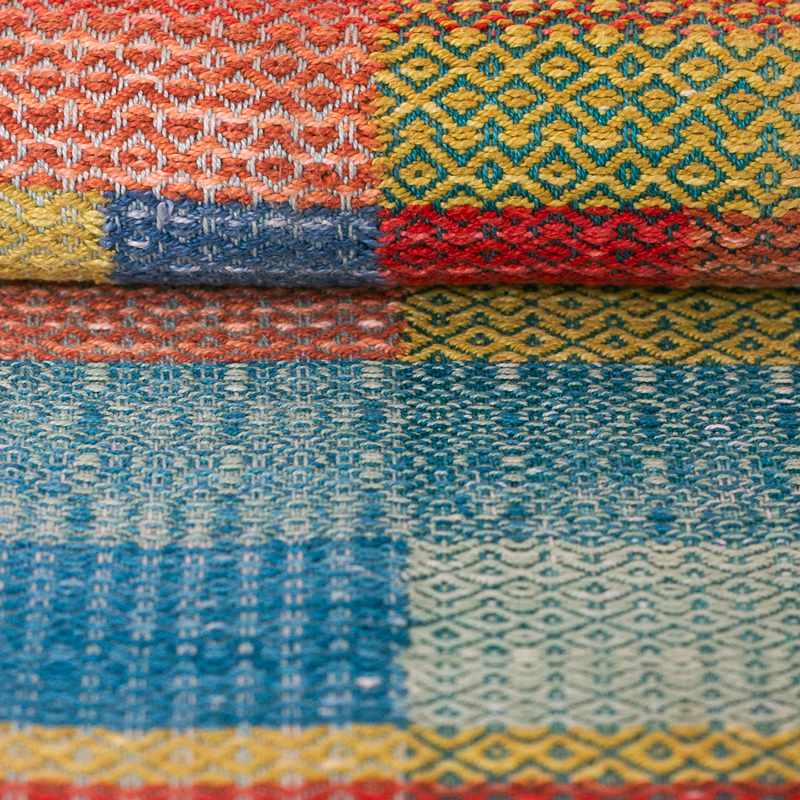
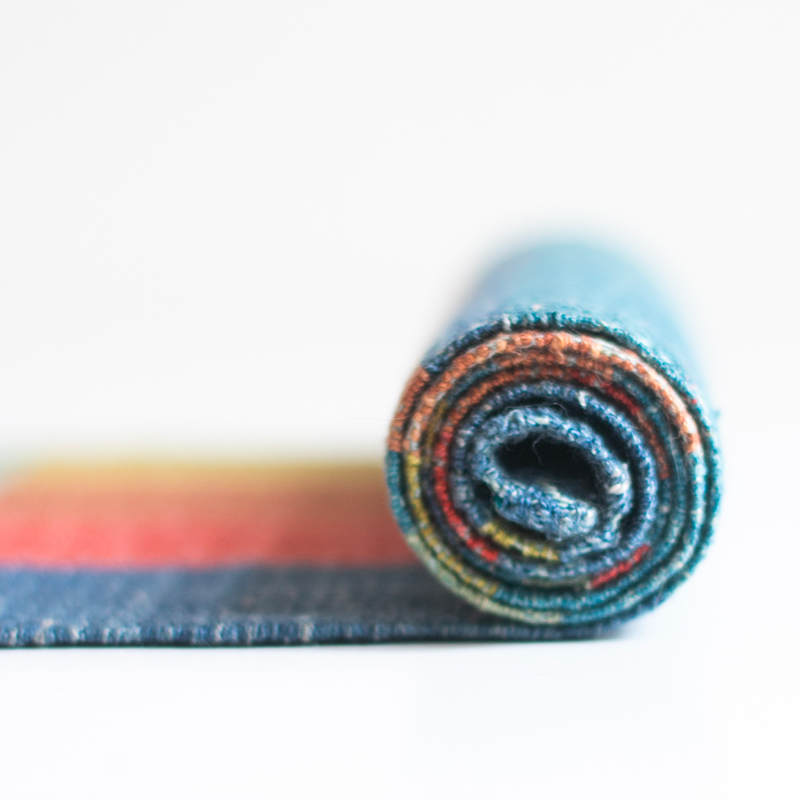
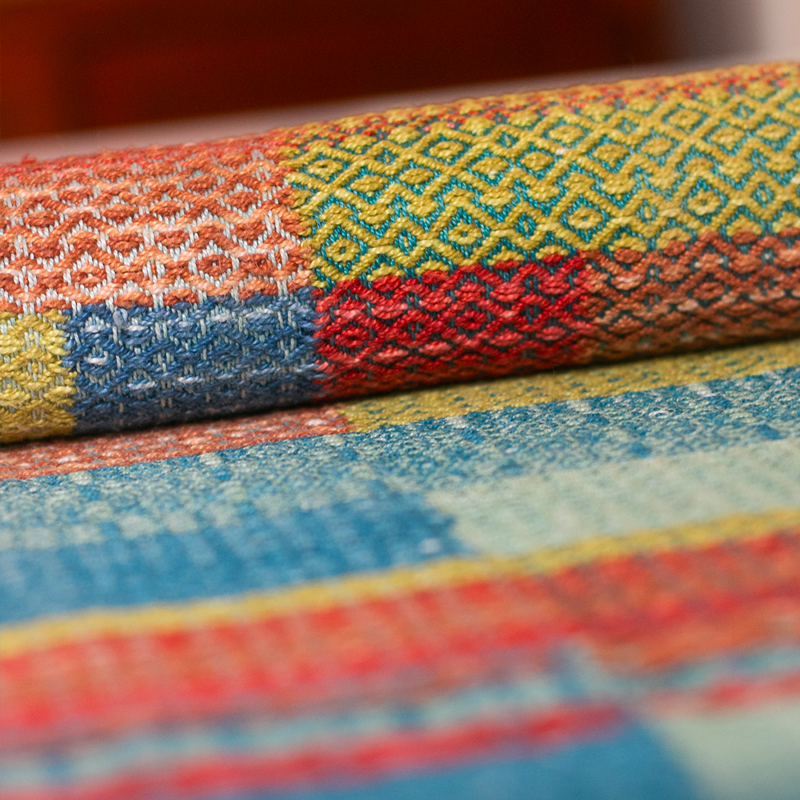
In learning how to weave, I was intrigued by how the use of multiple warp layers could create dimension on the loom. At the same time, I found myself thinking about the sonnet, the “little rooms” of its stanzas. I translated rhyme scheme to weft color and treadling, gestured to iambic pentameter with shades of warp, and enacted the sonnet’s volta, or turn, with the physical action of a tie-up change.
Initially, I thought I was exploring the architectural resonance between the poetic and woven forms, but the underlying reason surfaced: I needed to make a space to set my grief.
On the feast of Saint Catherine in 1994, I came home from preschool with a crown I’d made for my mother. She had died in a car accident that morning.
A linked cycle of sonnets, often addressed to a single person who is absent, is called a corona: a crown.
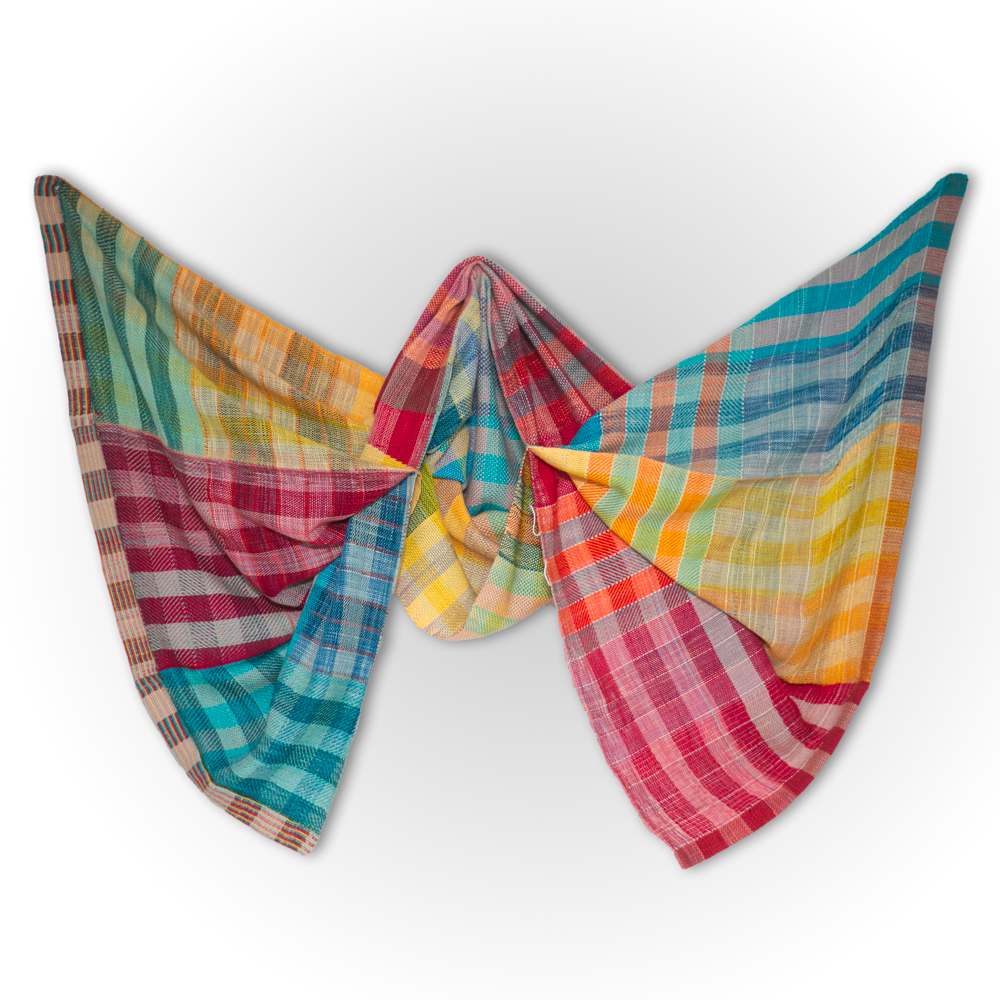

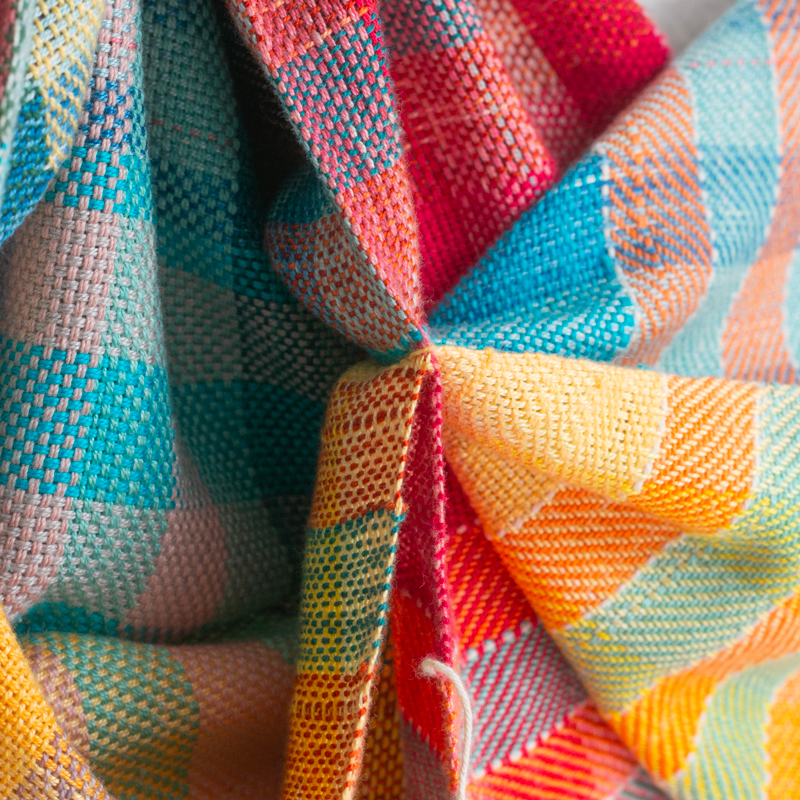
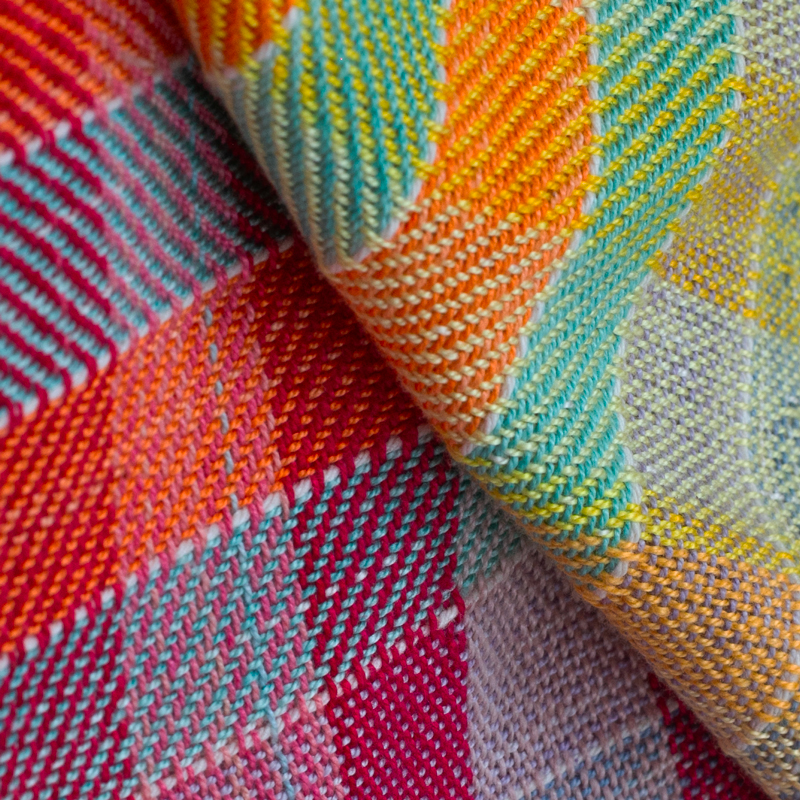
envelope
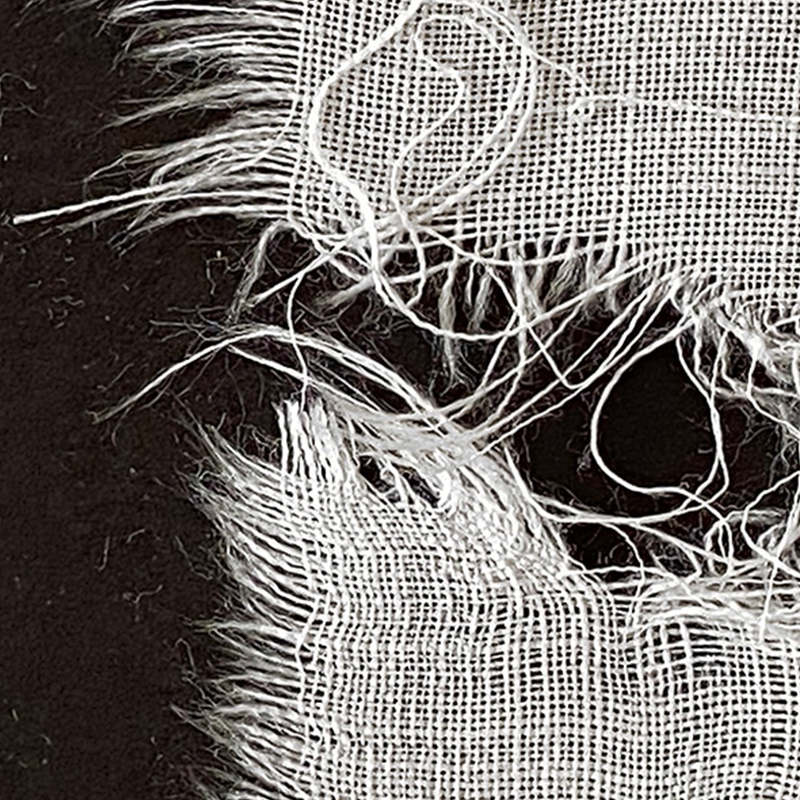
In weaving, what seems to be a surface is a multi-dimensional world—a choreography of threads moving up, across, along. And the past, always, embedded there. Holes, frayed edges, unraveling.
My thinking about the relationship of line and substrate, mark-making and time, was informed by two 19th-century subjects: Emily Dickinson’s envelope poems and Kasaï velvets from the kingdom of Kuba. In the essay, “Odd Secrets of the Line,” I discuss how their internal surface divisions expand the space of composition.
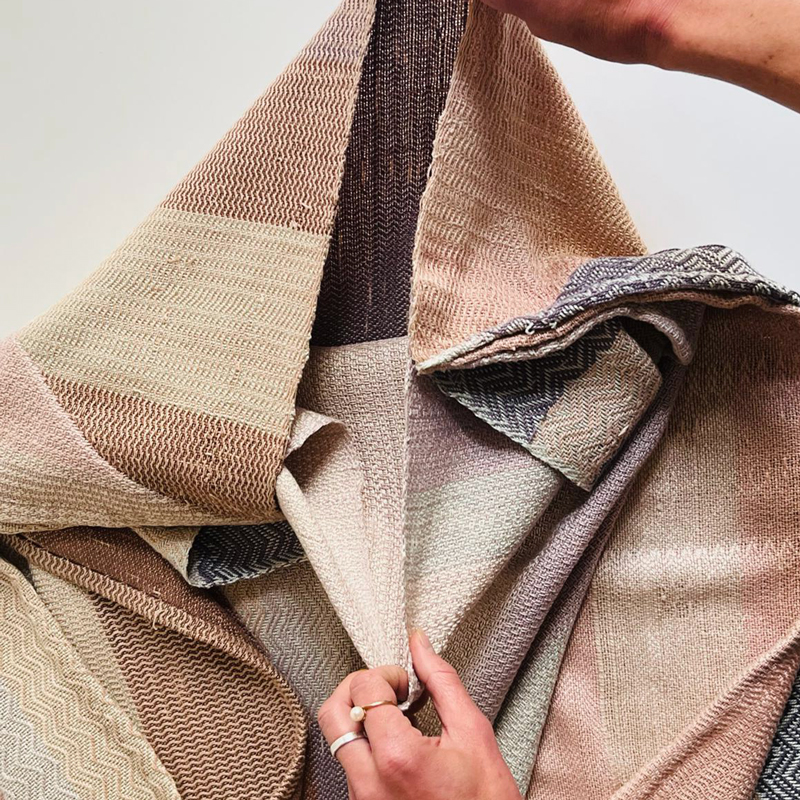
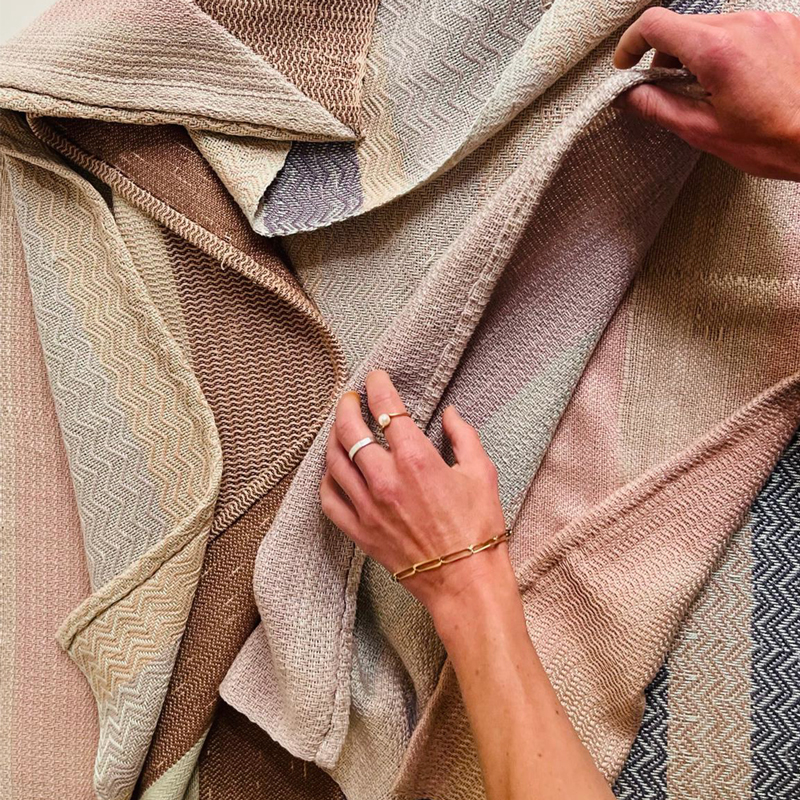
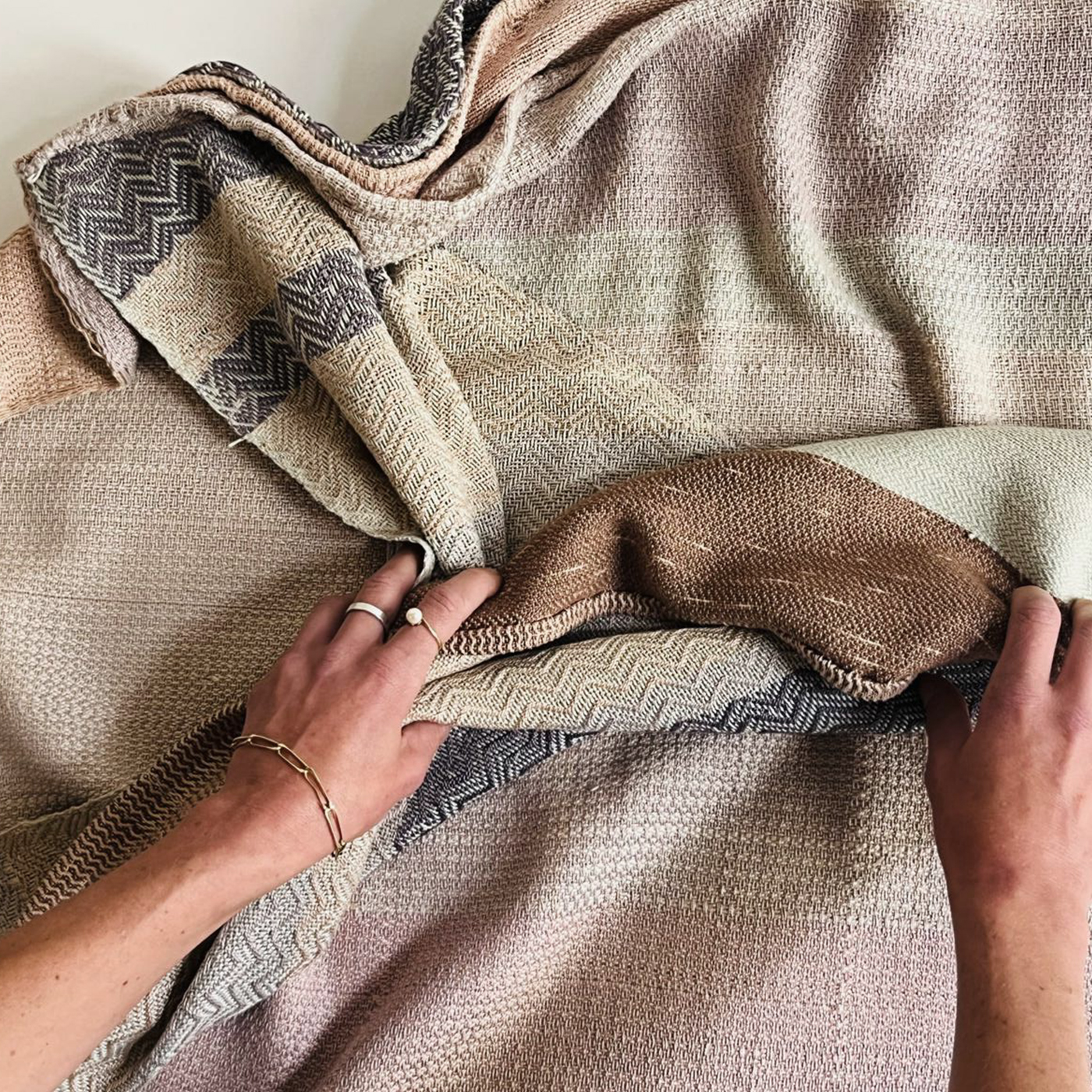
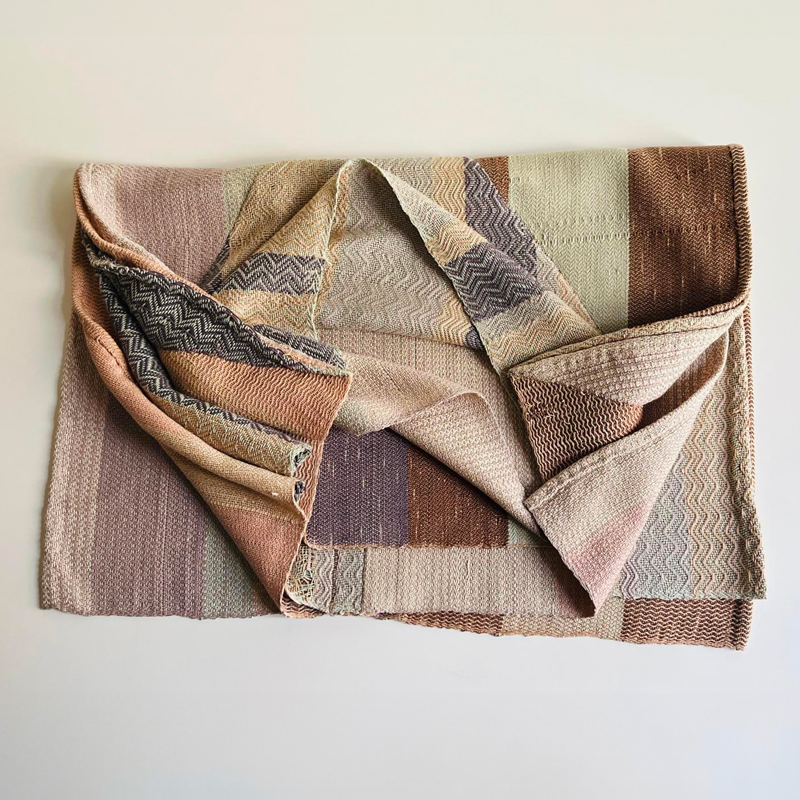
Inspired by Dickinson and Kuba textile artists, this woven envelope uses the poetic principle of enjambment—the line uniting, even as it divides—to compose in a number of directional fields, a gesture to how the past wraps around the present.
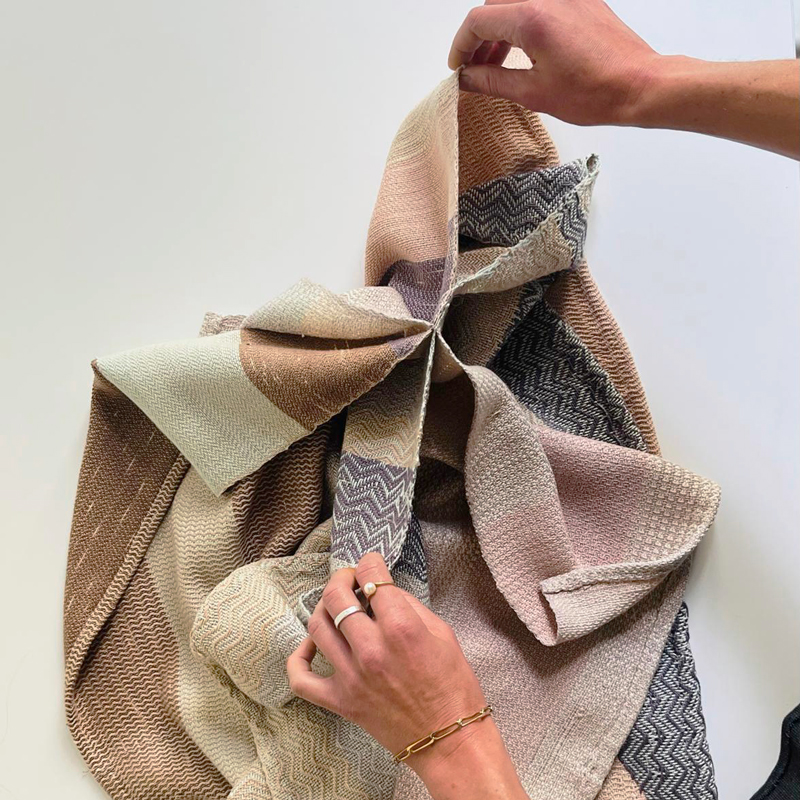
scroll
How do we inhabit a text?
I should construct my book, says Proust’s narrator, I dare not say ambitiously like a cathedral, but quite simply like a dress.
This idea of wearing a book delights me—a text as something one slips into, which in turn becomes a part of its reader-wearer as she makes her way through the world.
Appropriate, this portability, this movement: according to narrative scholar Jane Alison, neuroscientists have described the act of reading as a felt motionless movement through space.
As the reader remembers the path followed through a text, the weaver sees only a small portion of the cloth as she works: what has been woven wraps around the back beam, out of sight—an image of it held in her mind.
Anne Wilson’s Davis Street Drawing Room
An invitation to slow, close looking
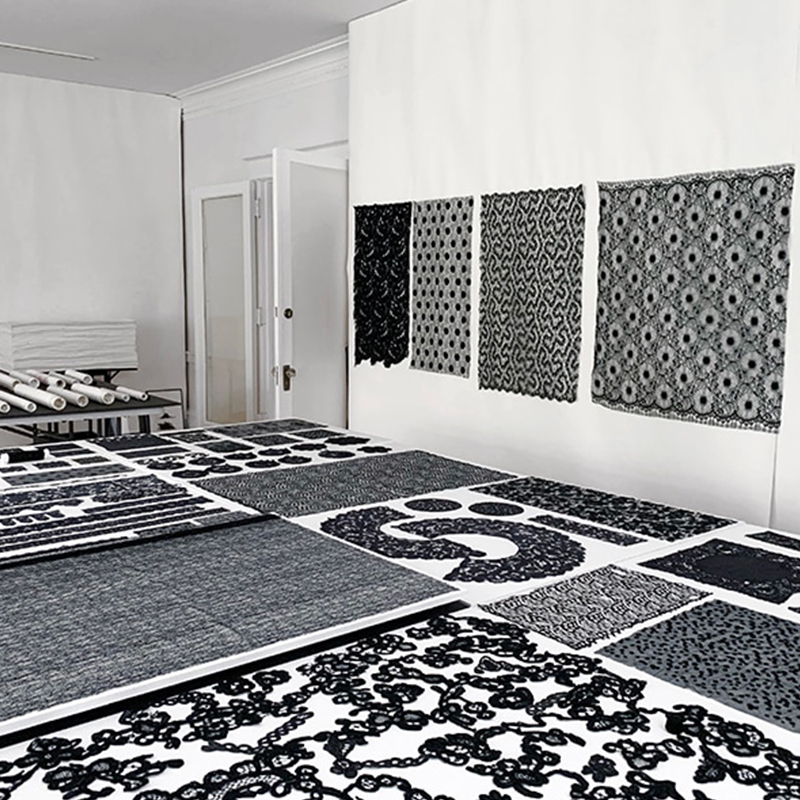
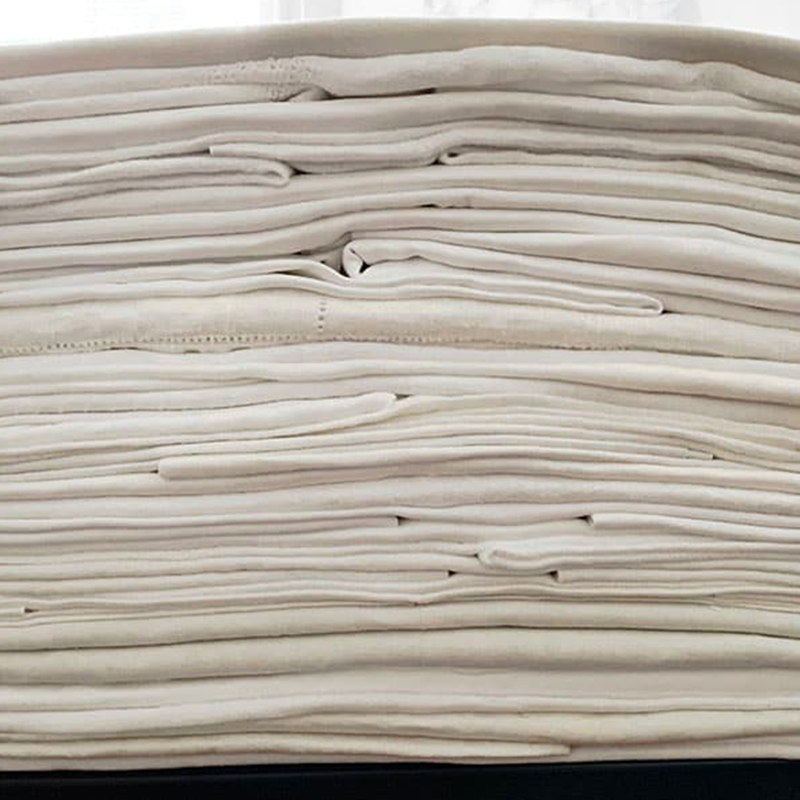
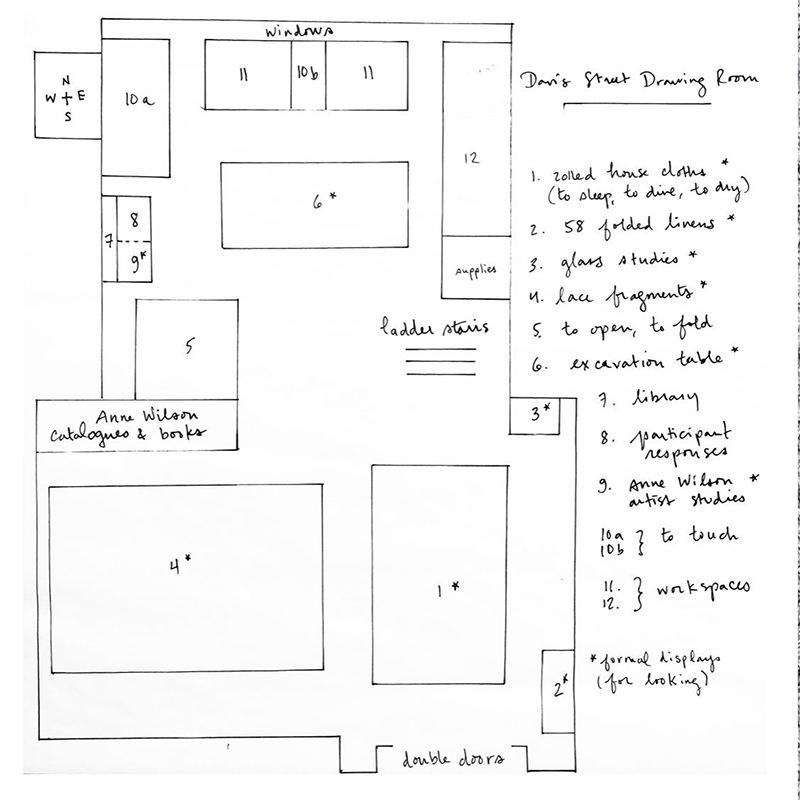
I collaborated with Guggenheim Fellow visual artist Anne Wilson as her studio and research assistant to develop the project narrative and layout of the Davis Street Drawing Room, her experimental art project based in Evanston, IL from 2022 – 2023 (extended as the inaugural exhibit of Museum of Arts and Design NYC in 2024).
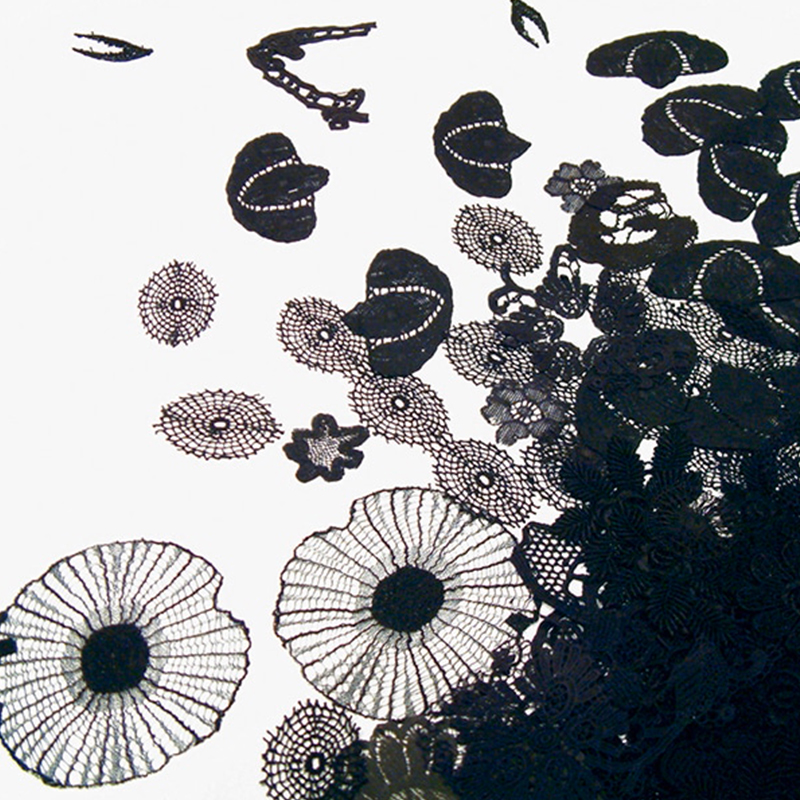
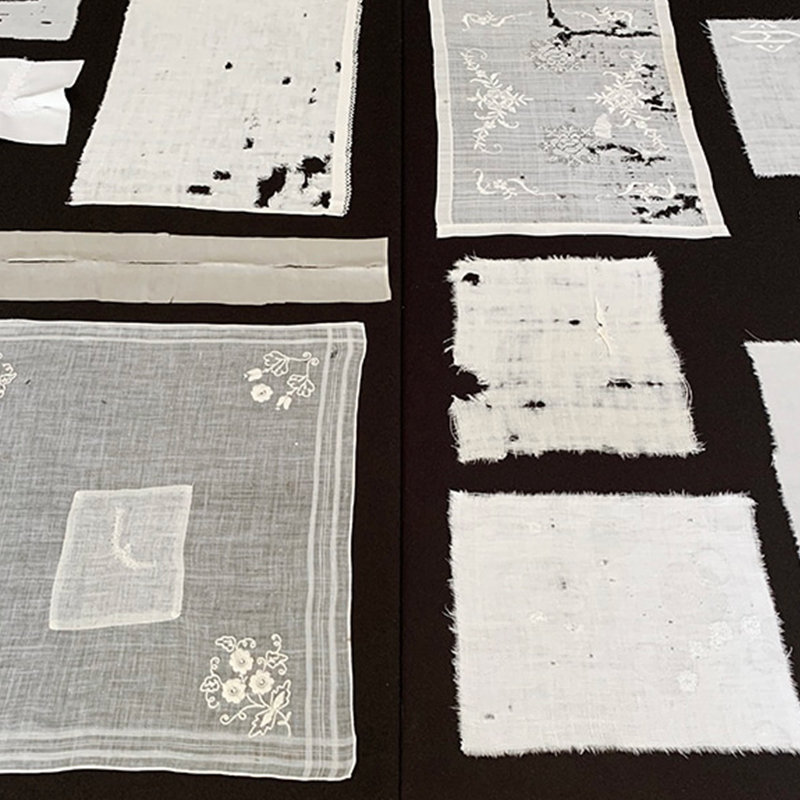
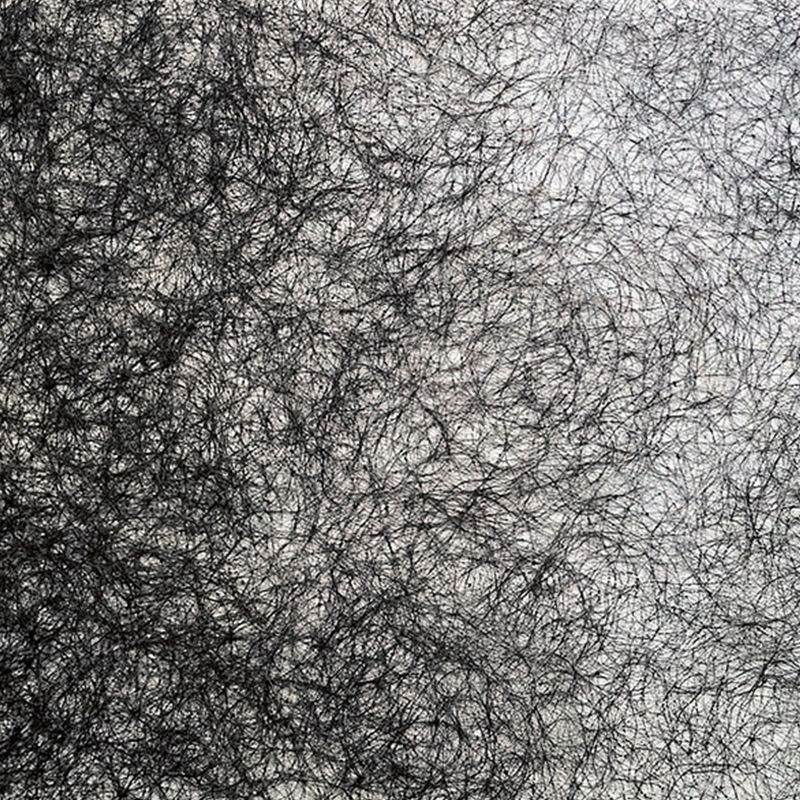
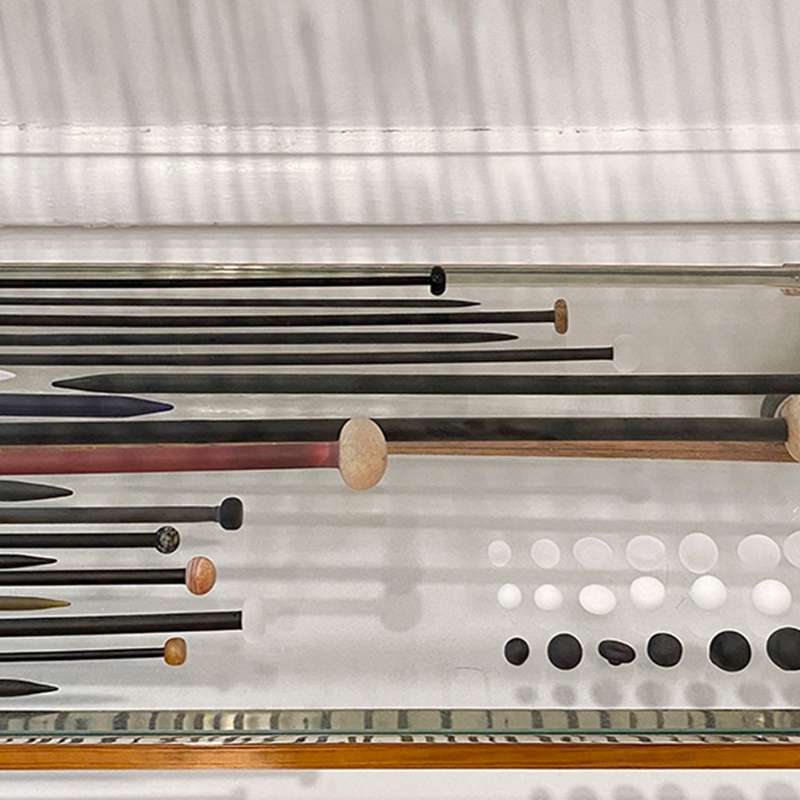
Throughout the summer of 2022, Wilson and I transformed her home studio into a drawing room—a room to draw in. We developed curated surfaces on the tables and walls, displaying selections excavated from her textile collection, the material basis for her art-making. My written prompts encouraged participants to observe, write, draw, and think deeply about the textiles. Through consideration of the formal and critical complexities of cloth fragments, participants were invited to create a visual or text-based “study” to share as part of a growing collection within the archive.