In search of haptic grammar
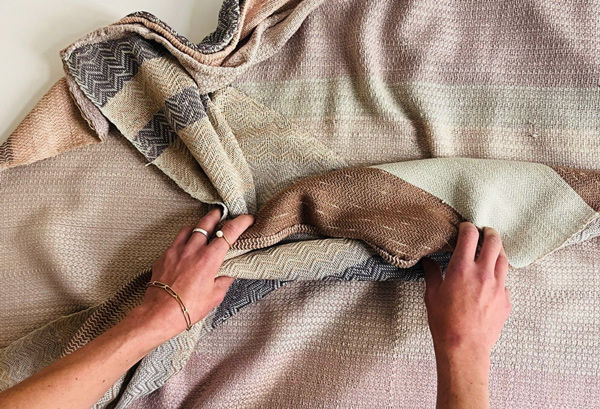
What structures shape the stories we give our lives?
As a writer and textile craftsperson, I explore how the architectures of written and woven forms illuminate one another. I began writing as a poet, and I’m fascinated by how humans have structured thought in threads, in lines. As my writing shifted into prose, I’ve been using the loom as a basis for movement in the essay and plot in the novel.
My interest in textile processes began with an apprenticeship to a tailor in the Grassfields of Cameroon, where I would later return to study the traditional Ndop cloth. In the interim, I worked as an alterations tailor and began weaving during my graduate studies in Chicago. These experiences helped me develop a tactile sensibility and an appreciation for the expressiveness of threads.
I am interested in working with language as a material to be felt, touched, handled. Much of my current writing takes the form of Oulipian (constraint-based) experiments that translate the process of weaving to the practice of prose. For example, an essay shifts tenses to the rhythm of the loom’s treadles; another adjusts focalization based on the position of the pattern blocks.
Perhaps the most profound resonance in this text-textile exploration comes from the imperative that anyone working with threads or shaping experience into language must repeatedly learn: to slow down and to pay close attention. This, to me, is the method of the human.
Read more on weaving and writing.